

Posted by at 11/22/2026 - Rooted & Rising
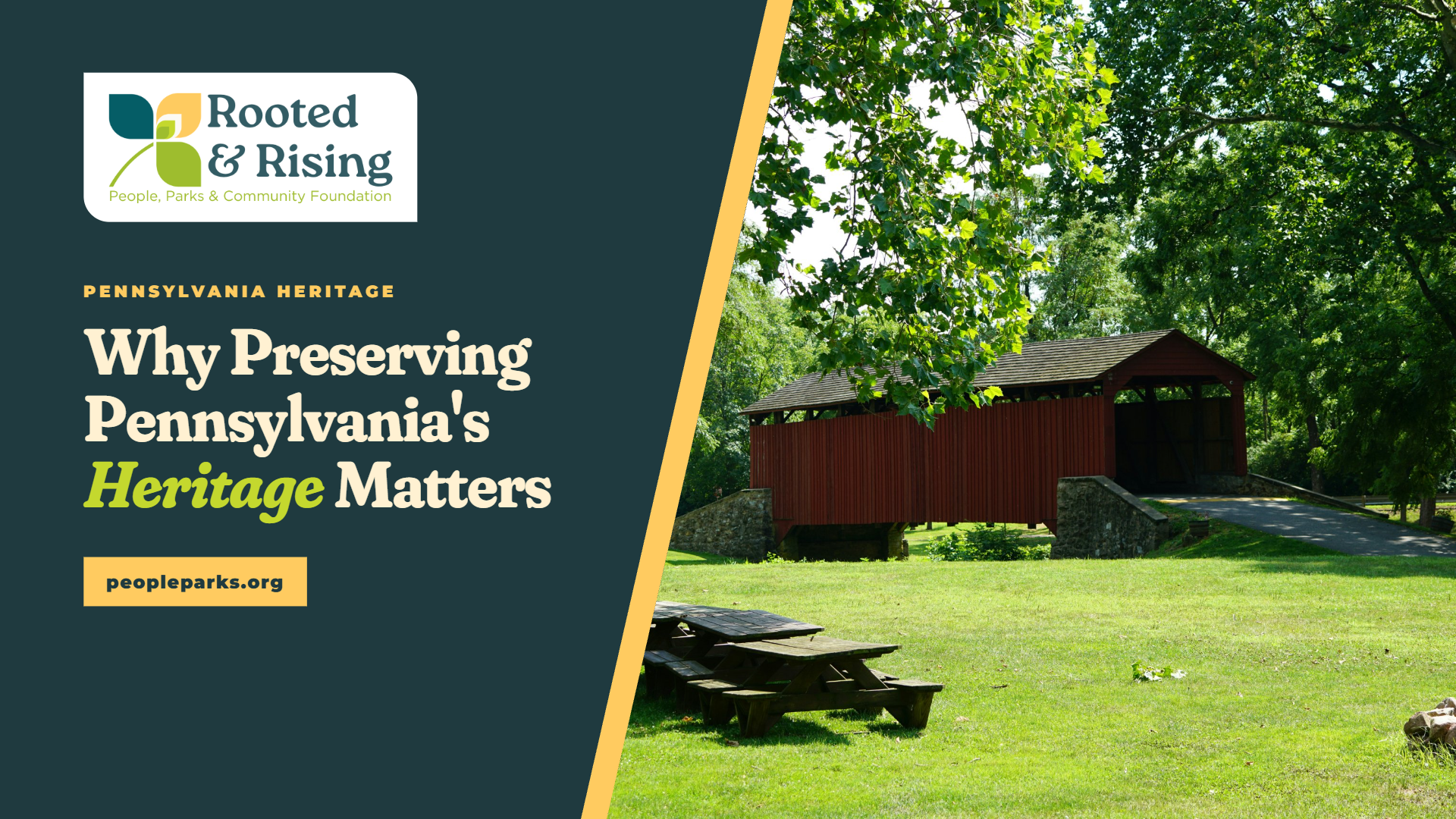
Think about the places that make your town feel like home. Maybe it’s a stone bridge over the creek, a covered pavilion at the park, an old train depot turned into a café, or a trail that follows a canal towpath. Most of us pass these places every day without thinking much about them. But they hold something important: the story of who we are and where we came from.
Pennsylvania has more of these stories than almost anywhere else in the country. This is where the Declaration of Independence and the Constitution were signed. It’s also where coal, steel, oil, lumber and railroads shaped the modern economy, and where generations of immigrants built close-knit neighborhoods and small towns. And in 2026, as the nation marks its 250th birthday, Pennsylvania sits right at the center of the celebration.
Preserving that heritage isn’t just about saving old buildings. It’s about keeping our communities healthy, connected and strong for the people who live here now, and for the ones who will come next. Here’s why it matters.
Heritage gives a community its identity
Every town has a personality, and a lot of it comes from its history. The mill buildings in a river town, the miners’ houses in a coal patch, a Main Street that still looks a lot like it did a hundred years ago. These places tell people, “This is who we are.”
When those places disappear, something gets lost that’s hard to put back. Familiar landmarks help people feel rooted, especially in towns that have seen big economic changes. They remind longtime residents of family and neighbors, and they give newcomers a way to understand and connect with the place they now call home.
That sense of belonging matters. People who feel connected to where they live are more likely to volunteer, show up for local events and take care of shared spaces like parks and playgrounds.
It brings neighbors together
Historic places are often where a community gathers. Think of the town square, the bandstand, the fairgrounds or the park that’s hosted the same summer festival for decades. Restoration projects bring people together too. Volunteers who help clean up a historic cemetery or rebuild a stone wall along a trail end up working side by side with neighbors they may never have met.
Preserved places also make room for many cultures and stories. Pennsylvania’s history includes the Lenape and Susquehannock peoples, Pennsylvania Dutch farm families, Black communities that shaped the Underground Railroad and the steel towns, and immigrants from Ireland, Italy, Poland, Slovakia, Puerto Rico and beyond. Saving the places connected to those stories helps everyone see themselves in their community’s history.
It’s a hands-on classroom
You can read about the Industrial Revolution in a textbook. Or you can stand inside a blast furnace, walk a canal towpath or ride a historic railroad. Heritage sites turn history into something kids and adults can see, touch and remember.
Pennsylvania makes this easy. The state’s historical marker program has placed nearly 2,600 markers telling the stories of the people, places and events that shaped the Commonwealth. Many of them sit right along roads and trails we use every day, so a quick stop can become a mini history lesson.
It’s good for local economies
Heritage isn’t just nice to have. It pays off.
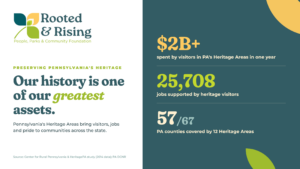
Pennsylvania has 12 state-designated Heritage Areas covering 57 of the state’s 67 counties, including Rivers of Steel, the Oil Region, the Lumber Heritage Region and the Schuylkill River National and State Heritage Area. Six of them are also national heritage areas, and the state notes that Pennsylvania has more federally designated heritage areas than any other state.
According to a study by the University of Pittsburgh at Johnstown for the Center for Rural Pennsylvania and HeritagePA, visitors spent more than $2 billion in Pennsylvania’s heritage areas in 2014. That spending supported 25,708 jobs and $798 million in labor income. About 70% of that visitor spending depended on heritage attractions, according to the Pennsylvania Department of Conservation and Natural Resources.
The bigger picture is impressive too. Pennsylvania’s tourism industry generated $83.9 billion in economic impact and supported more than 514,000 jobs in 2024, with 201.6 million visitors coming to the state. In 2021, the National Park Service reported that about 6.25 million visitors to Pennsylvania’s national parks, which include places like Gettysburg, Valley Forge and Independence Hall, spent roughly $298 million in nearby communities and supported 4,507 jobs.
Older buildings are good for small businesses as well. Research from the National Trust for Historic Preservation’s Preservation Green Lab found that neighborhoods with a mix of older, smaller buildings support more local, non-chain businesses. In Seattle, those areas had about 37% more jobs per 1,000 square feet of commercial space and roughly twice the share of women- and minority-owned businesses.
It’s better for the environment
There’s a saying among preservationists: the greenest building is the one that’s already built. The numbers back it up. The National Trust’s report The Greenest Building found that reusing a building almost always has a smaller environmental footprint than tearing it down and building new. Even a brand-new energy-efficient building can take 10 to 80 years to make up for the climate impact of its construction.
Preserved landscapes matter too. Historic parks, greenways, rail trails and canal paths protect open space, give wildlife room to live and give people a place to get outside, often right in the middle of town.
Parks and trails are where heritage and community meet
Some of Pennsylvania’s best-loved parks are also some of its most historic places. Rail trails follow the routes that once carried coal and timber. Canal towpaths are now walking and biking paths. Old estates, farms and mill sites have become community parks where families picnic, kids play and neighbors run into each other on a Saturday morning.
These spaces do double duty. They keep a community’s story alive, and they give people a healthy, free place to spend time together. Pennsylvania’s state parks alone generate about $16 in economic impact for every $1 the Commonwealth invests, according to DCNR’s 2025 data.
2026: The perfect time to celebrate where we come from
As America turns 250, Pennsylvania is telling its story in a big way. The Pennsylvania Historical & Museum Commission launched Pennsylvania 250: The Keystone of American History, a year of exhibits, events at historic sites and new historical marker trails across the state.
It’s a great reminder that history isn’t only found in big museums. It’s in our local parks, our main streets and the places our grandparents knew.
How you can help
You don’t have to be a historian to make a difference. Here are a few simple ways to get involved:
- Visit a local historic site, heritage area or rail trail, and bring a friend.
- Volunteer with your local historical society, park cleanup or “friends of the park” group.
- Share old photos and family stories with your local library or historical society.
- Show up at public meetings when your community is planning parks, trails or changes to historic places.
- Support local organizations that protect and improve community spaces.
Rooted in the past, rising for the future
At People, Parks & Community Foundation, we believe great parks and public spaces help communities thrive. Many of the places we support are also the places that hold a town’s story, from community parks and trails to gathering spaces that bring neighbors together.
When we protect our heritage, we’re not stuck in the past. We’re giving the next generation a strong foundation to build on.
Want to help keep Pennsylvania’s communities rooted and rising? Learn more about our work or make a gift at peopleparks.org/support.
Sources
- Pennsylvania DCNR, Heritage Areas
- PA Environment Digest, PA Heritage Areas Generate $2 Billion (University of Pittsburgh at Johnstown study for the Center for Rural Pennsylvania and HeritagePA)
- Pennsylvania DCED, Pennsylvania’s tourism industry generated nearly $84 billion in 2024
- National Park Service, Visitor spending in Pennsylvania, 2021
- National Trust for Historic Preservation, Older, Smaller, Better: Executive Summary
- National Trust for Historic Preservation, The Greenest Building
- Pennsylvania DCNR, Pennsylvania’s free state parks generate $16 for every $1 invested
- Pennsylvania Historical & Museum Commission, Pennsylvania Historical Marker Program
- Pennsylvania Historical & Museum Commission, Pennsylvania 250: The Keystone of American History
- Survey2Plan, Benefits of Preserving Heritage